Understanding Valet Parking Cost: A Complete Guide

Updated: Oct 14
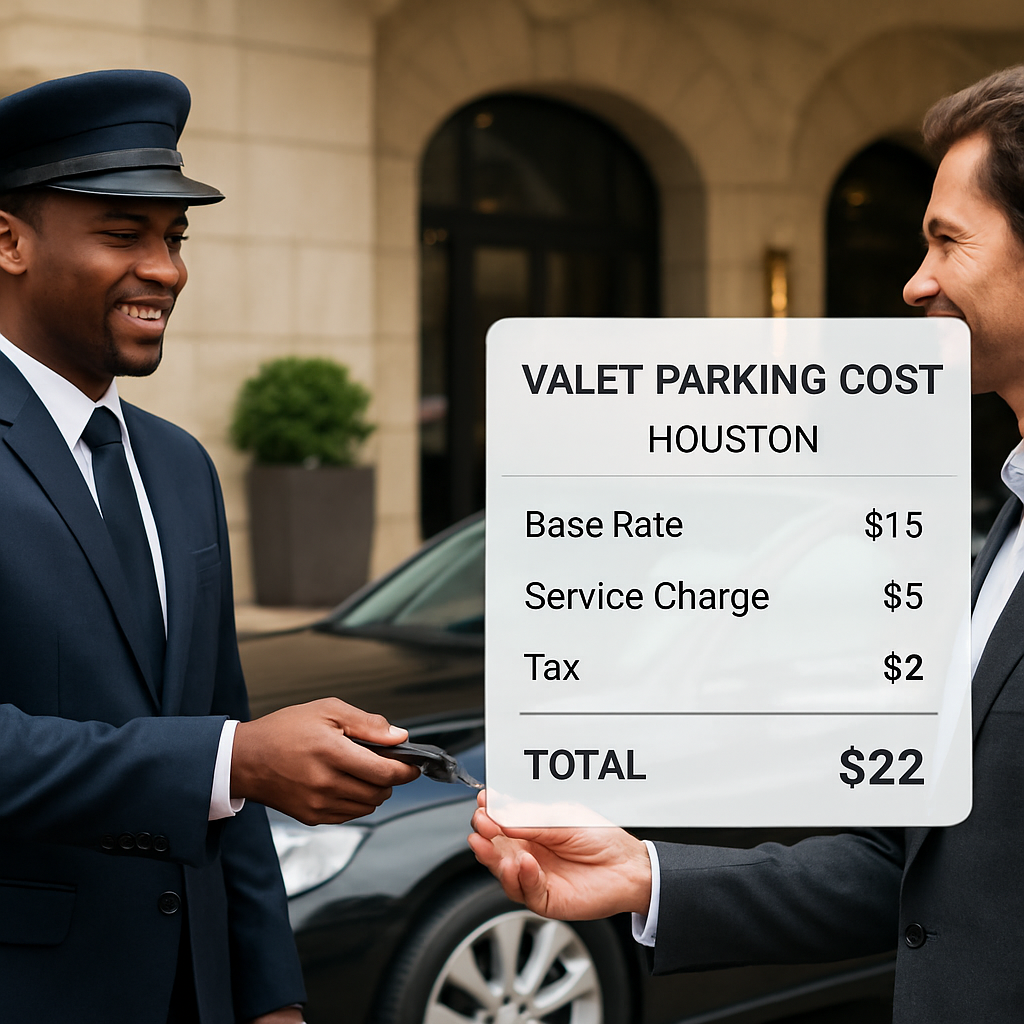
Ever walked into a fancy hotel in Houston, dropped your keys at the desk, and wondered exactly what that smooth valet service is going to cost you?
You’re not alone – property managers and event planners often stare at a blank spreadsheet, trying to guess whether the valet bill will eat up the whole budget.
The truth is, valet parking cost isn’t a one‑size‑fits‑all number.
It shifts with the size of the venue, the number of cars you expect, and even the time of day you’re operating.
And that’s why we start every project by breaking the price down into bite‑size pieces you can actually understand.
Take a downtown apartment complex that’s adding a valet lounge for its residents.
In our experience, the base rate might hover around $2 per vehicle, but once you factor in staffing during peak evenings and the insurance premium for high‑rise buildings, the average climbs to $3.50‑$4 per car.
That extra dollar can mean the difference between a happy resident board and a costly surprise at year‑end.
Now picture an event planner organizing a corporate gala at a hotel conference center.
A single night could see 300 guests, each expecting their car to be whisked away and returned on schedule.
We often recommend a flat fee of $5 per car plus a small service charge for staff overtime, which translates to roughly $1,500 for the whole night – a figure that fits neatly into most event budgets when you’ve accounted for catering and AV gear.
But what if you’re running a boutique restaurant that only sees a steady flow of 50 cars a night?
Here the math shifts again: a lower per‑car rate of $3 might be more realistic, especially if you can share staff between dining and valet shifts.
The key is to match staffing levels to traffic patterns, so you never pay for an extra attendant who’s just standing idle.
Grab it, plug in your venue’s specifics, and you’ll have a solid estimate before you even talk to a vendor.
TL;DR
Understanding valet parking cost lets property managers, event planners, and hotel owners quickly gauge budgets, avoid surprise fees, and choose the right staffing model for their venue.
Our quick worksheet and flat‑fee guidelines give you a clear, actionable estimate so you can plan confidently and keep guests smiling everywhere today.
Step 1: Understand the Components of Valet Parking Fees
When you first stare at a valet invoice, it can feel like you’re decoding a secret code. The good news? The fee isn’t magic – it’s a sum of a few predictable pieces. Let’s break those down so you can see exactly where every dollar goes.
First up is thebase per‑car charge. This is the amount you pay just for the car to be parked and retrieved. In Houston, most venues start around $2‑$3 per vehicle, but that number can swing depending on the level of service you expect.
Labor and staffing
Labor is usually the biggest chunk. It covers the valet attendant’s time, overtime premiums for peak hours, and any extra hands you need for high‑traffic events. For a boutique restaurant that sees a steady 50 cars a night, you might only need one attendant, keeping the labor cost low. A large conference center with 300 cars, however, could need three or four staff members, and the overtime rates can push the per‑car labor cost up by $1‑$2.
Think about it this way: if you’re planning a weekend wedding, you’ll probably need extra attendants for the cocktail hour rush. That extra coverage is reflected in the labor component.
Insurance and liability
Every valet operation carries a liability risk, so insurance is non‑negotiable. The premium is usually calculated per vehicle and can range from a few cents to a dollar, depending on the venue’s location and the value of the cars you’re handling. High‑rise apartments often see higher premiums because of the added complexity of moving cars between floors.
And yes, that insurance line item is why you’ll sometimes see a “service fee” tacked on – it’s basically the cost of protecting both the driver’s and the venue’s assets.
Equipment and technology
Many modern valet services use ticket printers, key safes, and even digital tracking apps. Those tools add a small surcharge, usually less than $0.50 per car, but they improve efficiency and reduce the chance of lost keys.
Imagine a busy hotel lobby where guests are juggling luggage and appointments. A digital system that instantly matches a key to a car can shave minutes off the return time, which translates into happier guests and fewer staff hours.
So, how do you pull all these pieces together?
Start by listing your expected vehicle count, then assign a realistic labor model – full‑time attendants for steady flow, part‑time or on‑call staff for spikes. Add the base per‑car rate, factor in insurance (ask your provider for a per‑vehicle quote), and sprinkle in a modest equipment fee. The sum of those numbers gives you a solid baseline.
Here’s a quick mental checklist:
Base per‑car rate (e.g., $2.50)
Labor cost per car (depends on staff hours)
Insurance premium per car
Equipment/tech surcharge
Plug those into a spreadsheet and you’ll have a transparent “valet parking cost” model you can share with property owners or event planners.
Want to see this in action? Watch the short video below where we walk through a real‑world cost breakdown for a downtown hotel event.
Notice how the video highlights each component we just discussed – that visual cue can be especially helpful when you’re presenting a proposal to a board.
Now that you’ve got the math down, the next step is to match those numbers to your specific venue’s traffic patterns. That’s where the real savings happen.
Step 2: How to Estimate Valet Parking Costs for Your Event
Okay, you’ve got the components nailed down, now it’s time to turn those numbers into a real estimate you can actually use. Think of it like cooking a recipe—you have the ingredients, but you still need to measure, mix, and taste before you serve.
1. Gather Your Event Data First
Start with the basics: date, venue, expected guest count, and parking layout. Write them down in a simple table. For a 200‑guest hotel conference, you might note “200 guests, 100 cars (assuming two per car), on‑site garage, 6‑pm to midnight.” For a boutique restaurant with a street‑side lot, you’d record “50 cars, limited curb space, 7‑pm to 11‑pm.” This snapshot will be the foundation for every calculation you do.
2. Calculate the Base Per‑Vehicle Rate
Take the per‑car figure you saw in Step 1 (usually $2‑$4 in Houston) and multiply by the number of cars. Example: 100 cars × $3 = $300. If your event is after 10 p.m., add the “night‑time surcharge” you’ve seen on most quotes—usually another $0.50 per car. That bumps the total to $350 for our conference scenario.
3. Add Labor Costs
Labor is where the budget can swing wildly. First, estimate how many attendants you’ll need at peak times. A good rule of thumb is one valet for every 15‑20 cars. For 100 cars, that’s about 5–6 attendants. Next, figure the hourly wage. In Houston, a valet typically earns $20‑$35 per hour; let’s use $28 as a mid‑point.
Now multiply: 6 attendants × $28 × 5 hours (the event runs 5 hours) = $840. If you need a supervisor—usually $45 per hour—add another $225. Labor alone can easily top $1,000 for a midsize event.
4. Factor in Parking Space Rentals & Permits
If the venue doesn’t have enough on‑site spots, you’ll rent nearby garage slots. In downtown Houston, a daily garage spot runs $8‑$12. Say you need 50 extra spots at $10 each = $500. Add any city permits—often $5‑$8 per space. For 50 spaces, that’s another $300. These line items appear as “rental fees” or “permit costs” on most quotes.
5. Include Custom Services and Extras
Do you want a red‑carpet entry, branded tickets, or a small welcome gift in each car? Those are usually $0.75‑$1.25 per vehicle. If you choose the premium package at $1 per car for 100 cars, that’s an extra $100. For high‑profile product launches, some planners add a “concierge attendant” fee of $150‑$200.
6. Don’t Forget Insurance and Gratuities
Liability insurance is non‑negotiable. Most vendors charge $0.30‑$0.60 per car. Using $0.45 for 100 cars adds $45. Then think about tips. If you want to bake a 10% gratuity into the contract, calculate 10% of the labor subtotal ($1,065 × 0.10 = $106.50). Round up to $110 for simplicity.
7. Build a Simple Spreadsheet
Grab a blank spreadsheet and create rows for each line item: Base Rate, Labor, Rentals, Permits, Extras, Insurance, Gratuity. In the adjacent column, plug in your numbers from the steps above. A quick SUM formula will give you the total valet parking cost. Seeing everything side‑by‑side makes it easy to spot where you can trim—maybe you can drop the custom tickets and still keep the experience classy.
8. Run a Sensitivity Test
Change one variable at a time to see how it impacts the total. What if attendance drops to 150 guests? Re‑calculate the car count, labor, and rentals. You might discover you can shave $200 off the budget without compromising service. This “what‑if” exercise is a lifesaver when a client asks, “Can we cut costs?” because you have a data‑backed answer ready.
9. Get a Quote and Compare
Once you have a solid estimate, reach out to a few vetted vendors for formal quotes. Provide them the same spreadsheet so they can see exactly what you expect. Compare line items—not just the final number. If one vendor’s labor rate is higher but their rental fees are lower, you’ll know where the trade‑off lies.
In our experience working with Houston hotels and event spaces, the most successful planners keep this spreadsheet on hand during negotiations. It shows you’re prepared, and vendors respect that.
So, to wrap it up: gather your event data, calculate each cost driver, plug everything into a quick spreadsheet, and run a few scenarios. You’ll walk into any valet‑parking conversation with confidence, and you’ll know exactly how the “valet parking cost” breaks down for your unique event.
Step 3: Comparing Valet Pricing Models (Table Included)
Alright, you’ve crunched the numbers for labor, space rentals, and extras – now it’s time to look at the big picture: which pricing model actually lines up with your budget and guest experience?
In Houston you’ll usually run into three common structures. The first is a simple “per‑car flat fee.” The second is an “hourly labor plus space rental” blend. The third is a “hybrid tiered” approach that caps the total once a certain car count is reached. Each one has a hidden trade‑off, so let’s break them down side by side.
What you’ll see in the table
Below is a quick comparison that highlights the core drivers you should watch: base rate, labor component, rental & permit fees, and where you might save or overspend.
Model | Base per‑car rate | Labor calculation | Rental/Permit impact | Best fit for |
Flat‑fee per car | $3‑$4 | Included in rate | Usually bundled | Small venues, predictable car count |
Hourly labor + space rental | $2‑$3 | $28‑$35 per attendant × hours | $8‑$12 per garage spot | Mid‑size events, variable attendance |
Hybrid tiered | $2.50‑$3.50 up to 100 cars, then $2 | Attendant hours + supervisor fee | Rental fee drops after threshold | Large conferences, budget‑tight clients |
Notice how the flat‑fee model hides labor inside the per‑car price. That works great when you know you’ll have roughly 50‑80 cars, like a boutique restaurant’s dinner service. But if you’re planning a corporate gala that could swing between 150 and 250 vehicles, the hourly‑plus‑rental model gives you more control because you can trim attendant hours if the turnout dips.
Here’s a real‑world snapshot: a downtown hotel hosted a 200‑guest product launch last spring. They started with the flat‑fee model at $3.80 per car, which gave them a headline cost of $760. When the event ran two hours longer than expected, labor surged and the final bill jumped to $1,050 – a 38 % surprise. Switching to the hourly‑plus‑rental model would have let them add only $120 for the extra two hours, keeping the total under $900.
Another example comes from a residential complex that added a valet lounge for its 120‑unit building. They chose the hybrid tiered model because the developer wanted a hard cap at $4,000. By setting the tier at 100 cars, the per‑car rate dropped after that point, and the final cost landed exactly at the cap, even though the event attracted 130 cars.
So, how do you decide which model to ask a vendor for?
Actionable steps
Write down your expected maximum car count. If you’re unsure, add a 20 % buffer.
Pick the model that aligns with your risk tolerance. Want certainty? Go flat‑fee. Want flexibility? Choose hourly‑plus‑rental.
Request a line‑item breakdown from each vendor. Look for “labor surcharge” or “rental discount after X cars.”
Run a quick spreadsheet test: plug your car count into each column of the table and watch the totals shift.
Ask the vendor if they offer a hybrid tiered option. Many Houston providers will customize the break‑point for you.
Tip: when you get a quote, compare the “per‑car” number at the low end of the range. If a vendor lists $2.90 per car but then adds $500 in “administrative fees,” you’re really paying $5.80 per vehicle. That’s why the table’s “Rental/Permit impact” column matters – it surfaces hidden costs before you sign.
If you need a quick visual of how the three models stack up against each other, think of a simple calculator you can build in Excel – you only need the columns from the table and a SUM formula. The tool stays free and flexible for Houston property managers and event planners.
The shift toward hybrid tiered models is reflected in recent industry market analysis , which notes that clients are demanding price caps without sacrificing service quality.
Finally, remember that the cheapest model on paper isn’t always the most efficient on the ground. A flat‑fee that looks low might require more attendants if traffic spikes, while an hourly model can be trimmed by scheduling a single attendant during lull periods. The sweet spot is the model that matches your event’s traffic pattern and gives you a clear, line‑item budget.
Does any of this feel overwhelming? Take a breath, pick one model, and run the numbers. You’ll quickly see which approach protects your bottom line and keeps guests smiling.
Step 4: Tips to Reduce Valet Parking Expenses
Feeling the sting of a valet bill that’s higher than you expected? You’re not alone. Most property managers and event planners hit that surprise line‑item once the invoice lands. The good news? A few small tweaks can shave hundreds off the final total without sacrificing service.
Audit Your Current Line Items
First, pull the latest quote and list every cost component on a sticky note or a quick spreadsheet. Look for anything that seems vague – “administrative fee,” “service surcharge,” or “miscellaneous.” In our experience, those vague items often hide a markup that can be negotiated down.
Ask yourself: does the fee actually reflect a service you need? If the answer is “maybe,” flag it for discussion with the vendor.
Bundle Services Where It Makes Sense
Many venues bundle valet with coat‑check, ticketing, or even a welcome drink. If you’re already paying for a separate coat‑check staff, ask the valet provider to drop that part of the package. Bundling can reduce per‑car rates because the attendant is doing more in the same amount of time.
Think of it like ordering a combo at a restaurant – you get more for less, and the kitchen runs smoother.
Leverage Off‑Peak Hours
Valet rates often spike after 10 p.m. or during weekend rushes. If your event can shift a portion of arrivals to an earlier window, you can negotiate a lower “night‑time surcharge.” Even moving a 30‑minute window can save $0.25 per car, which adds up fast for a 200‑car event.
Ask the vendor: “What would the rate look like if we schedule the peak window from 6 p.m. to 10 p.m. instead of midnight?” You’ll often hear a willing concession.
Validate Parking With Purchases
Validation is a win‑win: you give guests a perk while offsetting part of the valet cost. A restaurant could offer free valet for diners who spend $50 or more, a hotel could waive the fee for guests booking a night‑stay over $150. The key is to make sure the incremental revenue from the higher spend covers the validation cost.
Summon’s research on valet pricing strategies shows that validation can reduce the net valet expense by 10‑15 % when applied strategically.
Optimize Staffing With Data
Overstaffing is the silent budget killer. Use an operations dashboard—or even a simple manual count—to see when cars actually arrive. If you notice a lull between 8 p.m. and 9 p.m., pull one attendant for that hour. The saved labor cost is pure profit.
In a recent Houston boutique hotel, trimming a single attendant during a two‑hour lull shaved $120 off a $1,200 valet bill.
Negotiate Rental & Permit Fees
Parking space rentals and city permits are often quoted as flat fees per spot. Ask the vendor if they can secure a bulk discount or share the cost with a nearby garage. Sometimes a small partnership with a local parking structure can knock $5‑$10 per spot off the total.
Don’t forget to double‑check city permit rates – they can vary by district. A quick call to the Houston Parking Authority can reveal a lower tier you qualify for.
Set a Hard Cap
When you sign a contract, request a “maximum charge” clause. That way, even if attendance spikes, the total valet expense won’t exceed the agreed cap. It gives you peace of mind and forces the provider to manage their own labor efficiently.We’ve seen event planners lock in a $3,500 cap for a 250‑car gala and end up paying $2,800 because the vendor trimmed overtime hours.
Review and Reconcile Every Month
Don’t let the final invoice surprise you months later. Compare the invoice line‑by‑line with your original estimate. If something doesn’t match, flag it within 30 days. Most vendors are happy to issue a credit for overcharges.
Consistency builds trust – and trust keeps your valet parking cost under control.
Ready to put these tips into practice? Grab a notebook, run through the checklist above, and you’ll see the numbers drop before you know it.
Step 5: Negotiating with Valet Service Providers
You've already nailed the components, the estimates, and even a few cost‑cutting tricks. Now the real dance begins: the negotiation. If you walk in without a game plan, the valet parking cost can balloon before you know it.
Know Your Baseline Before You Talk Money
Start by revisiting the spreadsheet you built in Step 2. Highlight the line items that matter most to you—labor hours, rental fees, or any custom add‑ons. Having those numbers in front of you turns a vague “What’s your rate?” into a data‑driven conversation.
For example, a 150‑car corporate gala in downtown Houston showed a labor subtotal of $1,200. When the vendor quoted $1,500, you could point to your own calc and ask, “Why the extra $300?” Often the answer is “we include a night‑time surcharge.” That’s a lever you can negotiate down.
Ask the Right Questions (and Take Notes)
Before you sign anything, fire off a checklist of questions. The valet service contract template lists typical clauses you should expect: insurance coverage, overtime rates, and cancellation policies. Knowing what should be in the contract helps you spot missing protections.
What is the hourly overtime rate after the agreed shift?
Can you lock in a “maximum charge” cap?
Do you offer a discount if we bundle coat‑check or ticketing?
Write down each answer. If a vendor says “we’ll need a 10 % overtime surcharge,” you can counter with a fixed $150 overtime ceiling instead.
Leverage Tiered or Hybrid Pricing
Many Houston providers are flexible enough to shift from a flat‑per‑car fee to a hybrid model. Say you expect 120 cars but want protection if attendance spikes to 150. Propose a tier: $3.50 per car up to 120, then $2.80 for each additional vehicle. This keeps the valet parking cost predictable while still rewarding the provider for extra work.
We’ve seen an apartment complex negotiate exactly this structure and end up $400 under budget, because the provider agreed to drop the per‑car rate after the 100‑car threshold.
Bundle Services to Win Discounts
If you already have a separate coat‑check crew, ask the valet vendor to drop that line item. Or, if your event includes a welcome drink station, suggest the valet team handle the beverage pass distribution for a small flat fee. Bundling creates efficiency and usually shaves 5‑10 % off the total.
One event planner bundled a valet ticket printer with their ticketing software and saved $120 on a $2,300 bill.
Put It in Writing—And Keep a Copy
Never rely on a handshake. Once you and the vendor agree on rates, ask for a revised quote that reflects every concession you earned. Include a “hard‑cap” clause that says the total valet parking cost will not exceed a specific dollar amount, no matter how many cars show up.
Then, after the event, reconcile the final invoice line‑by‑line within 30 days. If something looks off, flag it immediately; most vendors will issue a credit rather than start a dispute.
Quick Negotiation Checklist
Bring your cost spreadsheet and highlight priority line items.
Ask about overtime rates, caps, and bundled discounts.
Propose a hybrid tiered pricing model if attendance is uncertain.
Request a written amendment that includes a maximum charge clause.
Set a 30‑day review window for the final invoice.
When you walk into that meeting armed with numbers, a clear ask, and a written agreement, the valet parking cost stays under control and you walk away feeling like you got the best possible deal.
Step 6: Legal and Regional Considerations for Valet Costs
Before you sign that final line on the quote, you need to make sure the legal and regional pieces aren’t sneaking up on you.
Understanding local licensing and permits
In Houston, every valet operator must hold a valid business license and prove they carry the state‑required liability insurance. The city also demands that each attendant has a clean driver’s record and completes a certified safety course. If you’re managing a condo garage in The Woodlands, the county adds a separate permit fee for street‑side valet zones.
Why does this matter for your valet parking cost? Those license fees and permit charges usually show up as a “regulatory surcharge” on the invoice. It can be anywhere from $0.20 to $0.60 per vehicle, but if you’re unaware you’ll end up paying a hidden $300 on a 500‑car event.
Here’s a quick way to verify the paperwork: ask the vendor for a copy of their Texas Department of Licensing certificate and a copy of the city permit receipt. Compare the numbers to the line items on the quote.
Insurance must‑haves
Valet insurance comes in two flavors: garage liability that covers third‑party injuries, and garage‑keeper’s liability that protects the customer’s car. Both are non‑negotiable if you want to avoid a costly claim later. The insurance guide from a national parking association breaks down the exact coverage limits you should demand – typically $1 million per incident for bodily injury and $500 k for property damage.
When you request proof of coverage, look for an “additional insured” endorsement that lists your property or event name. That way the insurer will step in if a valet attendant damages a guest’s vehicle, and you won’t be left holding the bill.
Regional rate variations
Even within the Greater Houston area, the per‑car cost can swing based on zoning. Downtown venues often face a “peak‑hour surcharge” of $0.50 per car after 10 p.m. because the city charges extra for after‑hours curb use. In suburbs like Katy, the surcharge drops to $0.15 because the streets are less congested.
One event planner we worked with booked a gala at a River Oaks hotel. The original quote was $4.20 per car, but after we pointed out the “after‑hours” clause, the vendor agreed to a $3.70 flat rate by moving the final reception to 9:30 p.m. instead of midnight. Small timing tweaks can shave hundreds off the valet parking cost.
Actionable checklist for compliance
Confirm the vendor’s business license is current and matches the city where the event sits.
Request a copy of the liability and garage‑keeper insurance certificates; verify the coverage limits.
Ask for a detailed breakdown of any “regulatory surcharge” or “permit fee” line items.
Map the event timeline against local after‑hours surcharge rules; adjust arrival or departure windows if possible.
Include a “maximum charge” clause in the contract that caps total regulatory fees at a pre‑agreed amount.
Schedule a pre‑event walk‑through with the valet manager to confirm the designated parking area meets local safety standards.
By running through this checklist, you’ll keep the valet parking cost transparent and protect yourself from surprise legal fees. Remember, the goal isn’t just to get the lowest price – it’s to secure a service that complies with Houston’s regulations while staying within your budget.
Next up, we’ll look at how to negotiate those optional add‑ons without inflating the final bill.
Conclusion
We've taken a deep dive into every piece that makes up the valet parking cost, from the base per‑car rate to labor, permits, insurance, and those little add‑ons that can sneak up on a budget.
So, what should you walk away with? First, map out each line item on a simple spreadsheet – that visual cue alone often reveals where you can trim. Second, use timing tricks: shift peak arrivals a half hour earlier or negotiate a night‑time surcharge cap, and you’ll shave dollars without compromising guest experience.
In our experience, property managers who lock in a hard‑cap clause and request a detailed breakdown of regulatory surcharges avoid surprise invoices. Event planners who bundle coat‑check or ticketing with the valet crew typically see a 5‑10 % discount because the staff can handle multiple tasks in one flow.
Remember, the cheapest per‑car figure isn’t always the best deal. A flat‑fee that looks low can balloon if overtime spikes, while an hourly‑plus‑rental model gives you the flexibility to scale labor up or down.
Ready to put these tactics into practice? Grab your cost table, run a quick sensitivity test, and walk into the next vendor meeting feeling confident that you control the valet parking cost, not the other way around.
FAQ
What factors drive valet parking cost?
The bottom line starts with the base per‑car rate, which covers the attendant’s time to greet, retrieve, and park a vehicle. On top of that you’ll see labor wages, overtime premiums, and any shift differentials for late‑night service.
Then add the hidden line items: garage rentals or street‑permit fees, liability insurance per vehicle, custom add‑ons like red‑carpet drops, and the gratuity buffer you build into the budget. Each of those can swing the total by a few dollars per car, so tracking them separately makes negotiations easier.
How can I estimate valet parking cost for a 150‑car event?
Start by plugging the known numbers into a simple spreadsheet: base rate per car × 150, plus the estimated labor headcount (one attendant per 15‑20 vehicles) multiplied by the hourly wage and the number of event hours.
Next, add rental or permit fees for any off‑site spots, a $0.30‑$0.60 insurance charge per vehicle, and a 10 % tip buffer on the labor subtotal. When you sum those rows you’ll see a total that’s realistic and easy to compare against vendor quotes.
Is it better to choose a flat‑fee per car or an hourly‑plus‑rental model?
A flat‑fee looks simple—you pay one number per vehicle and the labor is baked in. It works well when you’re confident about the car count and the event runs a predictable schedule.
The hourly‑plus‑rental approach gives you flexibility. If attendance dips or you can shift peak arrivals, you can trim attendant hours and avoid paying for unused labor. For large conferences with variable turnout, that model often saves a few hundred dollars compared to a flat‑fee that overestimates labor.
How do night‑time surcharges affect the overall valet parking cost?
Many Houston vendors add a $0.40‑$0.60 surcharge for any car parked after 10 p.m. That seems small, but on a 200‑car event it adds up to $80‑$120 on top of the base rate.
You can negotiate that charge down by moving the final reception earlier, or by asking the provider to cap the surcharge after a certain hour. Even a 30‑minute shift can shave $30‑$50, which can be reallocated to a nicer welcome amenity.
What should property managers look for in a valet service contract?
First, verify that the vendor lists a hard‑cap clause so the total bill can’t exceed a pre‑agreed amount, even if attendance spikes. Second, check that liability insurance meets the $1 million per incident threshold we recommend for commercial events.
Also, watch for vague “administrative fees” and ask for a line‑item breakdown of any permit or regulatory surcharges. A clear clause on overtime rates—preferably a fixed ceiling instead of a percentage—protects you from surprise charges after the shift ends.
Can I reduce valet parking cost by bundling other services?
Bundling coat‑check, ticketing, or even a welcome drink station with the valet crew often trims the per‑car rate because the attendants are handling multiple tasks in the same time block.
In our experience, hotels that combine valet with a concierge pass saved 5‑10 % on the overall invoice. Just ask the provider for a “combo discount” and outline exactly which extra duties you want covered.
How often should I audit the final valet invoice?
Treat the invoice like a checklist: compare each line item to the numbers you entered in your spreadsheet, and flag any unexpected fees such as extra overtime or unexplained permit charges.
You’ve got 30 days from receipt to dispute a discrepancy. A quick call to the vendor’s account manager usually clears it up, and keeping a written record of the conversation helps if you need to follow up later.
Comments