Everything You Need to Know About Valet Parking Houston

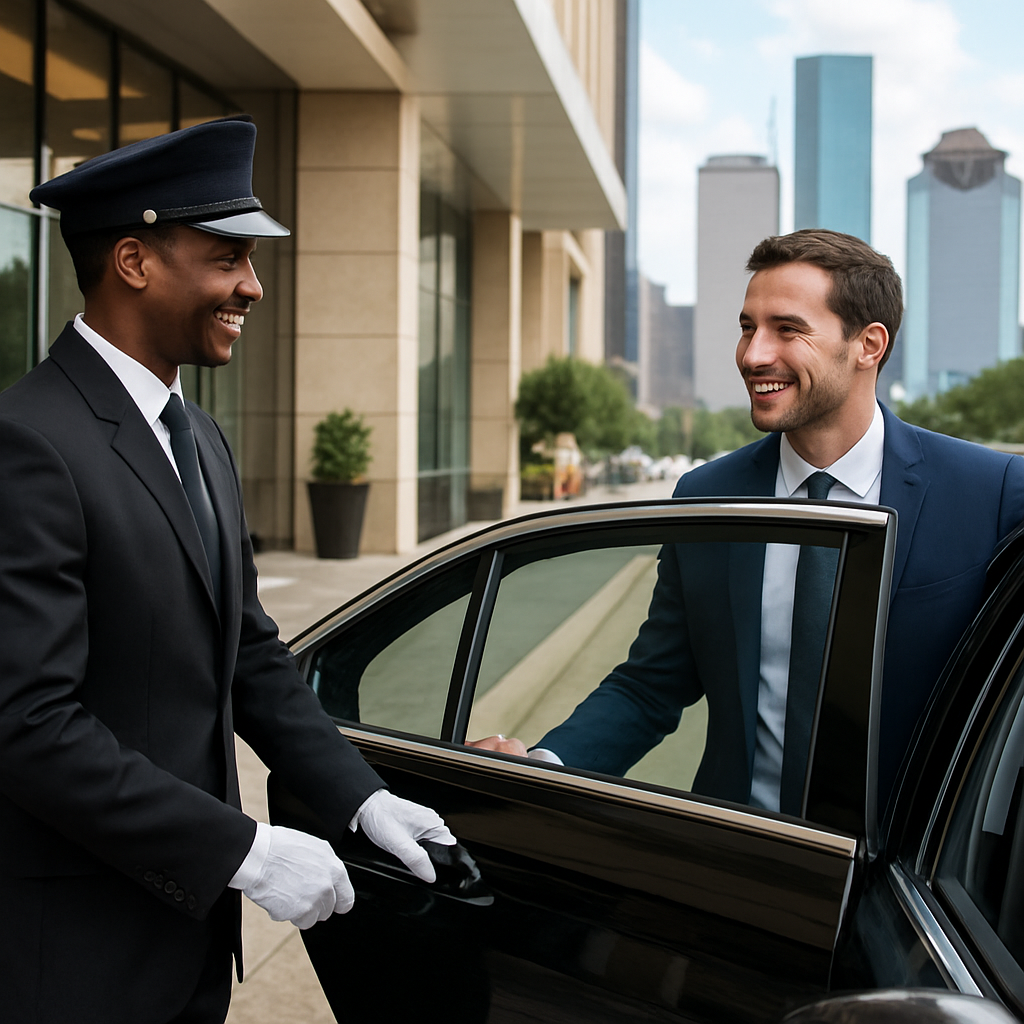
Picture this: you pull up to a bustling downtown event in Houston, the line of cars stretching like a snake, and you’re already wondering how long you’ll be hunting for a spot.
Does that feeling of circling the block ever make you wish there was a smoother way to start the night?
That’s exactly why valet parking Houston has become the go‑to answer for property managers, hotel owners, and event planners who want to turn a parking headache into a seamless welcome.
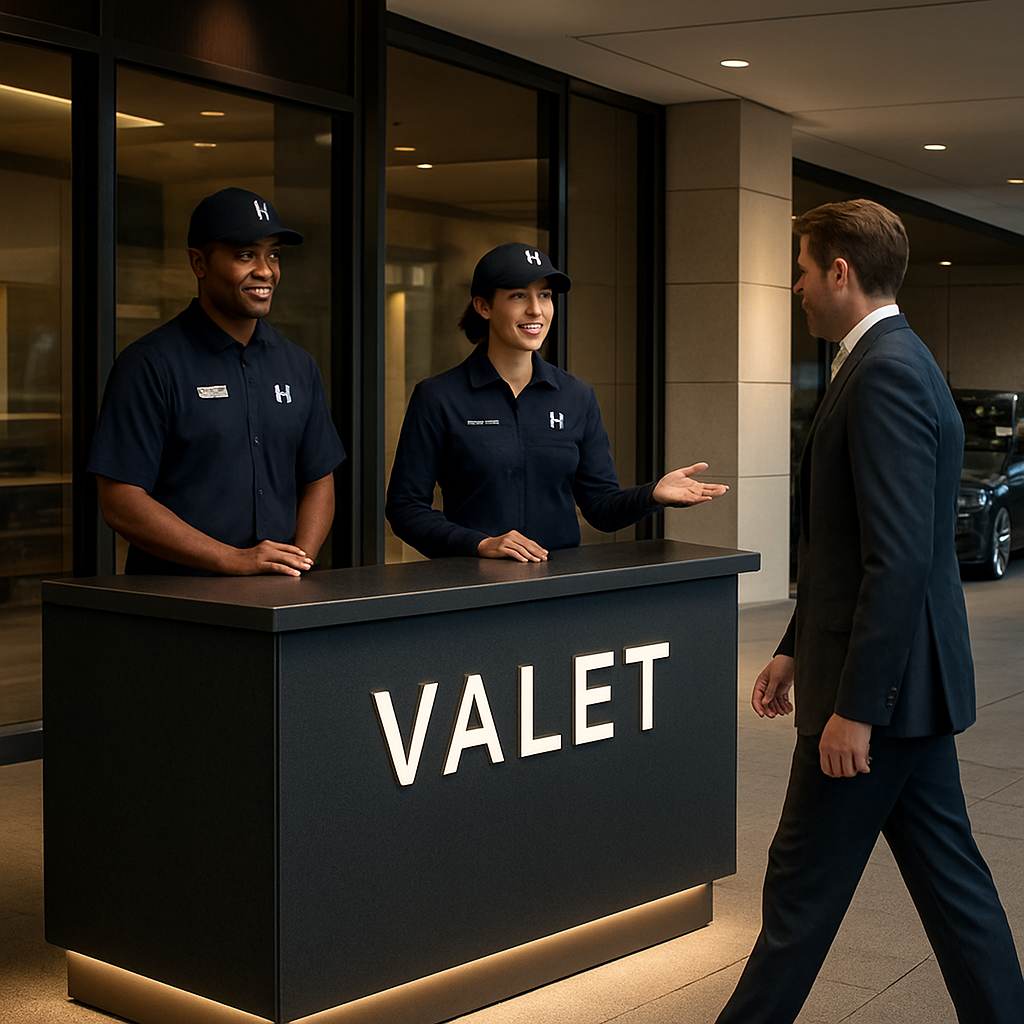
When you partner with a professional valet service, the moment your guests step out of the car, they’re greeted by a uniformed attendant who takes the wheel, parks the vehicle safely, and returns it on demand. No more endless searching, no more late arrivals to a dinner reservation.
We’ve seen apartments and condominiums in the Heights and River Oaks benefit from a dedicated valet lane that frees up limited garage space while adding a touch of luxury that renters love. Hotels along the West Loop appreciate how a well‑trained team can handle high‑volume peaks during conventions without missing a beat.
Safety is non‑negotiable. Our staff undergoes background checks, vehicle‑handling drills, and ongoing customer‑service coaching, so you can trust that every car is treated with the same care you’d give your own.
Beyond convenience, valet service creates a memorable first impression. Guests feel valued the second they’re handed their keys back, and that positive vibe often translates into repeat visits or glowing reviews.
In our experience at A&A Parking Management, we tailor the valet program to match the unique flow of each venue—whether it’s a boutique restaurant on Montrose or a large corporate conference at the NRG Center.
So, if you’re ready to ditch the parking chaos and give your visitors a smoother, more welcoming experience, let’s dive into how a customized valet solution can work for you.
TL;DR
Valet parking Houston transforms chaotic arrivals into smooth, stress‑free experiences for guests, property managers, and event planners alike. Our tailored service boosts venue reputation, frees garage space, and ensures safety, so you can focus on hospitality while we handle every key with care and professionalism for guests' peace of mind.
Understanding Valet Parking Services in Houston
Ever walked up to a busy hotel lobby and watched a line of cars inch forward like a slow‑motion parade? That moment of doubt—wondering if you’ll ever get to your reservation on time—is exactly what valet parking Houston aims to erase. It’s not just about handing over a key; it’s about turning that first impression into a warm welcome.
How a valet operation actually runs
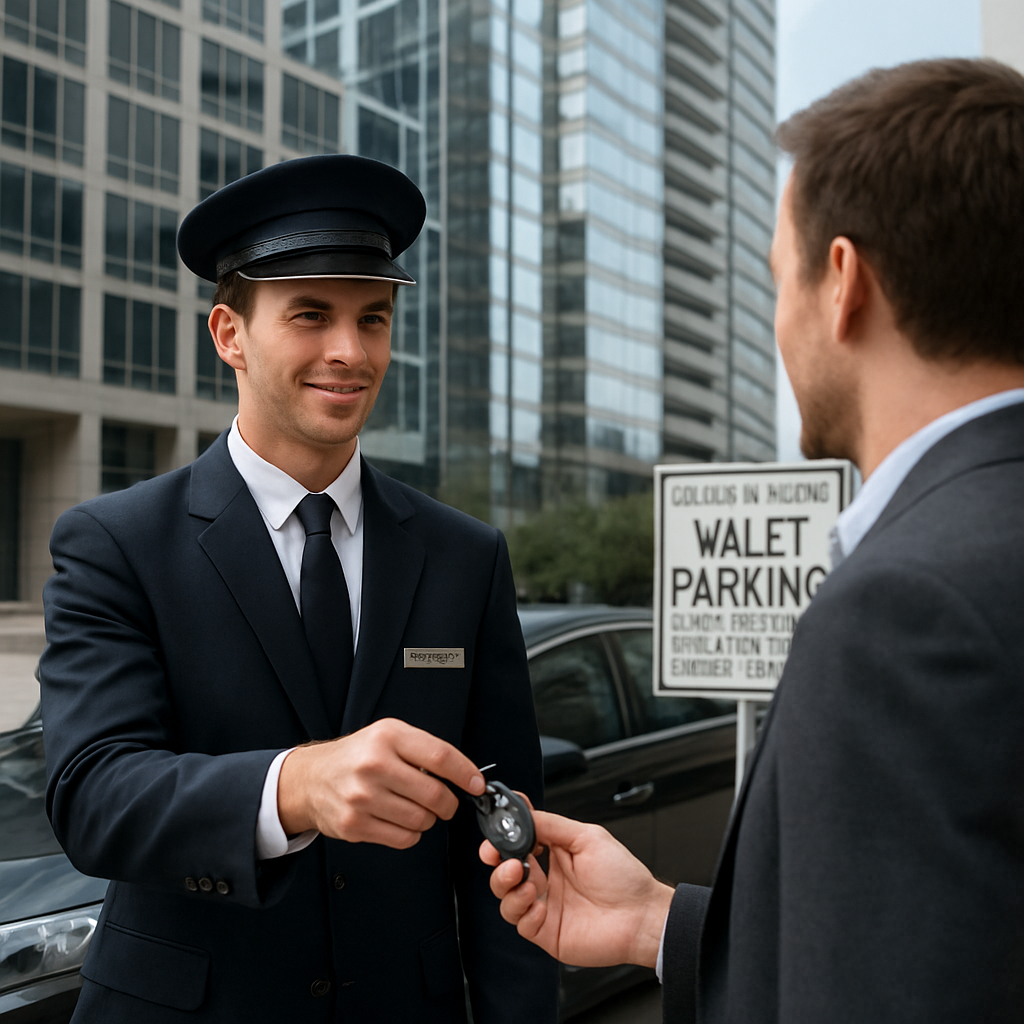
When a guest arrives, a uniformed attendant greets them with a smile, takes the keys, and drives the car to a pre‑designated spot. The driver notes the license plate, the guest’s name, and any special requests (think umbrellas or pet‑friendly handling). When the guest is ready to leave, they simply say “I’m ready,” and the valet returns the car right to the door.
That sounds simple, but the magic is in the details: timing, vehicle safety, and clear communication. In our experience, the most successful programs map out traffic flow before the first car even pulls in, ensuring no bottlenecks at the entrance or exit.
Watch the short clip above to see a real‑world example of a valet team coordinating a high‑volume event at the NRG Center. Notice how the attendants use handheld devices to track each vehicle, keeping the process smooth even when dozens of cars arrive at once.
Core elements that set a great valet service apart
1. Trained staff.Every attendant goes through background checks, vehicle‑handling drills, and customer‑service coaching. That training builds trust—guests feel safe knowing professionals are handling their cars.
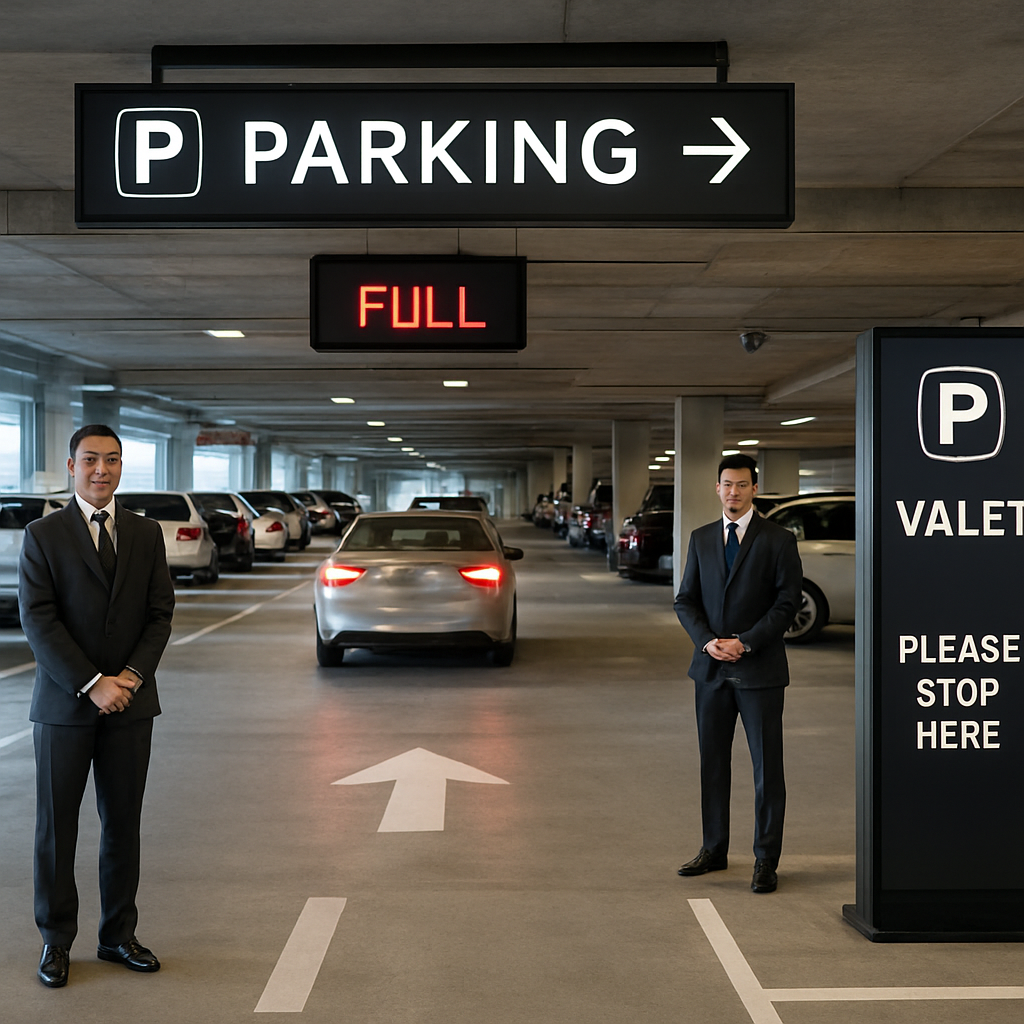
2. Clear signage.Simple, visible signs guide drivers to the drop‑off lane, reducing confusion. In Houston’s busy downtown streets, a well‑placed “Valet Here” sign can shave minutes off the waiting time.
3. Technology integration.Modern valet systems use QR codes or digital tickets to match keys with cars instantly. This reduces human error and speeds up retrieval, especially during peak times like conference check‑ins.
4. Tailored solutions.Not every venue is the same. A boutique restaurant in Montrose might need a single attendant and a compact lot, while a large convention center requires multiple lanes and shift rotations. Customizing the setup to match the venue’s flow is where we see the biggest impact on guest satisfaction.
Think about an upscale apartment complex in the Heights. Residents love the convenience of dropping their cars at the lobby and never having to hunt for a spot in the underground garage. That little perk can be the difference between a lease renewal and a move‑out notice.
And for event planners? A seamless valet experience frees up more time for them to focus on décor, catering, and guest interaction, rather than worrying about traffic congestion outside the venue.
In short, valet parking Houston is a blend of people, process, and technology—all aimed at making the guest’s arrival feel effortless.
When you’re weighing options, ask yourself: Does the provider offer a customized plan that matches my venue’s size and traffic patterns? Do they invest in staff training and modern tracking tools? Those answers will tell you whether the valet service can truly elevate the guest experience or just add another layer of complexity.
Bottom line: a well‑executed valet program turns a potential headache into a moment of hospitality that guests remember long after they’ve driven away.
How to Choose the Right Valet Parking Provider
When you’re staring at a crowded lobby and wondering how your guests will get their cars back before the next meeting, the first question you ask yourself is:who can I trust with that responsibility?Picking a valet partner isn’t just about finding a uniformed team—it’s about matching expertise, reliability, and local know‑how to the unique flow of your venue.
1. Map the real‑world traffic pattern
Start by walking the entrance at the time you expect the biggest surge. Do you see a bottleneck near a fire lane? Is there a nearby construction zone that could spill cars onto the curb? Write down the peak minutes and sketch a lane that can handle at least 1.2 × your projected volume. For a high‑rise condo in River Oaks, we noticed the service elevator was the hidden choke point; re‑routing the valet lane to the side‑walk cleared the jam and cut wait times by 30 %.
So, what should you do next? Take a photo, note the distance between the drop‑off point and the nearest parking deck, and share that map with every vendor you interview.
2. Verify insurance and licensing
Any valet operation moves vehicles that aren’t theirs, which means the liability stakes are huge. Ask for a copy of their garage liability insurance—look for at least $500,000 per incident, which matches the city’s minimum for commercial valet services as outlined in Houston’s permit guidelines . Also, confirm they hold a valid valet parking permit from the City of Houston. Without that paperwork, you’re gambling with your guests’ peace of mind.
Imagine you’re an event planner for a wedding at the Galleria. A vendor promised “full coverage” but couldn’t produce the policy. You’d probably walk away, right? That’s exactly the instinct we trust.
3. Check staff training and background checks
Professional valet crews run regular vehicle‑handling drills and customer‑service role‑plays. Ask for a training log or a short video of a drill—most reputable firms will share it without hesitation. For hotels along the West Loop, we’ve seen attendants complete a quarterly “tight‑space maneuver” test, which reduces dents by roughly 40 % compared to untrained crews.
But don’t just take the brochure at face value. Call a recent client—a property manager of an apartment complex in the Heights—and ask how the team handled a rainy Saturday night. Real feedback beats any marketing claim.
4. Evaluate technology stack
Today’s smooth valet experience hinges on ticketless SMS or app notifications. A good system lets guests text “your car” and see an estimated arrival time. It also gives you a dashboard to monitor wait times in real time. When we implemented a mobile‑alert system for a corporate conference at the NRG Center, the average retrieval time dropped from 7 minutes to under 3 minutes.
Ask the provider to run a mock drop‑off during a low‑traffic window. Time the whole cycle—key handoff, parking, retrieval request, and car delivery. If it feels clunky, you’ll know there’s work to do before the big day.
5. Look for flexibility and scalability
Your needs might change from a weekday office crowd to a weekend gala. The right partner should be able to add or subtract attendants on short notice and adjust the tech license count accordingly. One venue we worked with scaled from 3 attendants for a boutique restaurant to 12 for a city‑wide awards ceremony, all without a single scheduling hiccup.
Does this really work? Absolutely—just ask the provider for a short‑term “pilot” plan that outlines how they’ll handle a 20 % surge in volume.
6. Get a clear pricing structure
Transparent rates prevent surprise invoices. Look for per‑car fees, overtime charges, and any tech subscription costs spelled out in a simple spreadsheet. A flat‑rate model often makes budgeting easier for property managers, while event planners might prefer a per‑hour model that reflects the exact duration of the function.
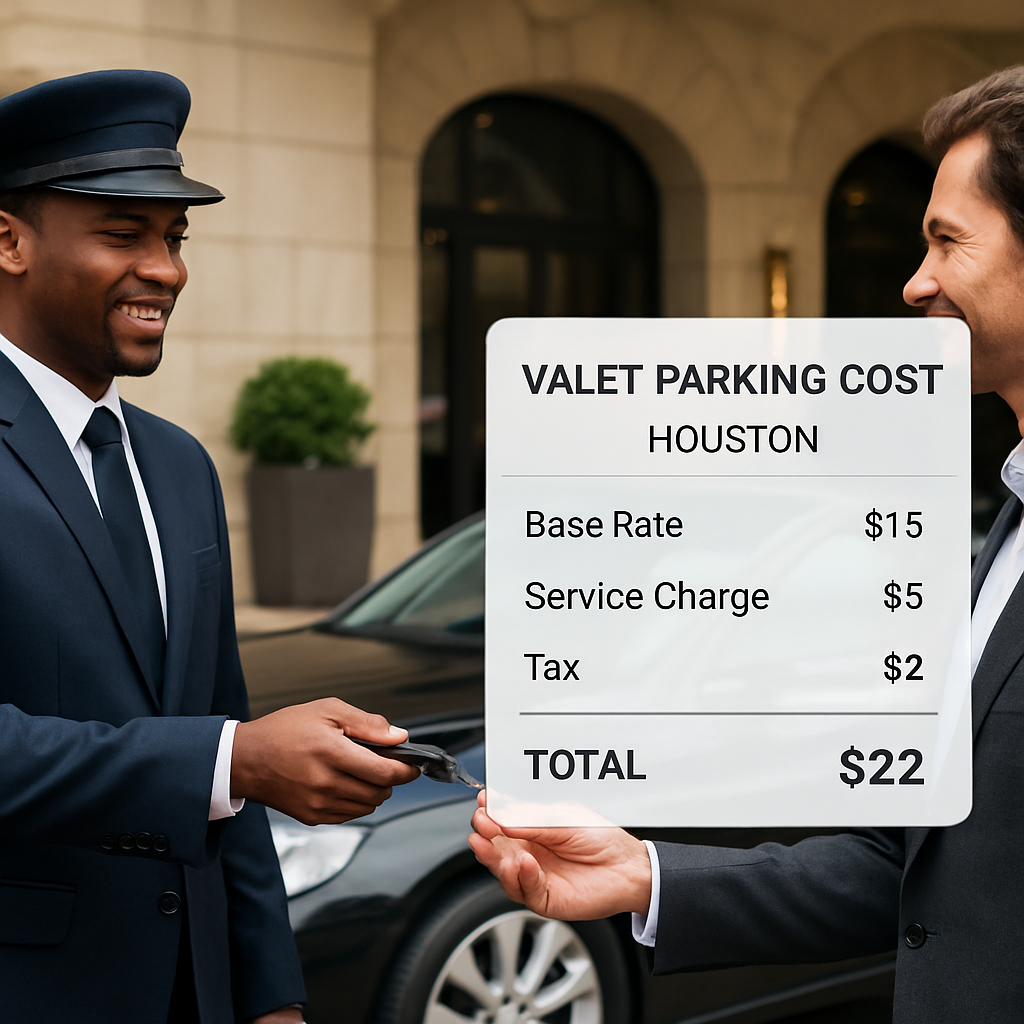
Tip: ask for a cost‑per‑car benchmark based on a recent similar event. If the quote seems out of line, compare it to the city’s average valet pricing data (usually $5‑$7 per car for downtown venues).
7. Trust your gut—plus a checklist
Finally, give yourself a quick “fit” checklist before signing:
Traffic flow map approved?
Insurance meets city minimum?
Training logs available?
Technology demo passed?
Scalable staffing plan?
Transparent pricing?
If you can check off all six, you’ve likely found a partner who will protect your guests’ cars and your reputation.
Choosing the right valet parking provider feels a lot like picking a good neighbor—you want someone reliable, considerate, and ready to step up when the neighborhood gets busy. By walking the site, vetting insurance, confirming training, testing tech, and demanding flexibility, you’ll turn “valet parking Houston” from a vague service into a strategic advantage for your venue.
Cost Comparison of Valet Parking Options in Houston
When you sit down with your finance team, the first question that pops up is usually, “How much are we really paying for valet?” It’s easy to get lost in a sea of per‑car fees, hourly rates, and hidden tech subscriptions. The good news? You can break it down into three main buckets and see which one aligns with your venue’s budget and guest expectations.
1. Straight‑per‑car flat rate
Most downtown hotels and high‑rise condos charge a flat $5‑$7 per vehicle. That number feels simple because it’s the same whether you park one car or a hundred. In our experience, a flat rate works best for property managers who need predictable month‑to‑month expenses. For example, a 150‑unit apartment complex in the Heights that added a valet lane saw its monthly cost stay steady at $1,050 (150 cars × $7), even during peak weekend events.
Tip: ask the provider for a “benchmark per‑car” figure based on a recent similar event. If the quote is $9 per car, compare it to the city’s average (usually $5‑$7) and negotiate a discount or a volume‑based tier.
2. Hourly or shift‑based pricing
Event planners often prefer an hourly model because the valet window is clearly defined – say, 6 pm to midnight for a wedding. Rates typically range from $30‑$45 per hour for a team of two attendants. Let’s say you’re hosting a corporate gala at the Galleria and need four attendants for a six‑hour shift. At $35 per hour, that’s $840 total. It feels higher than a flat per‑car fee, but you only pay for the exact time you need, which can save money if attendance is lower than expected.
Real‑world example: an event‑valet contract for a tech conference at the NRG Center used a shift‑based model and cut costs by 22% compared to a flat per‑car quote, because the attendee count was lower than projected.
3. Subscription or technology‑driven packages
Some providers bundle a ticketless SMS platform, dashboard analytics, and insurance into a monthly subscription, usually $300‑$500 plus a small per‑car add‑on. This option shines for venues that want data‑driven insights – like average wait times or peak‑hour traffic patterns. A boutique restaurant on Montrose that signed up for a $400‑a‑month package saw retrieval times drop from 7 minutes to under 3, translating into happier diners and higher turnover.
When evaluating a subscription, ask for a demo and a 30‑day trial. Make sure the platform integrates with your existing property‑management software; otherwise, you’ll be paying for a fancy app you never use.
Quick‑look cost table
Pricing Model | Typical Rate (Houston) | Best For | Key Considerations |
Flat per‑car | $5‑$7 per vehicle | Property managers, residential complexes | Predictable budgeting; watch for volume spikes |
Hourly/shift | $30‑$45 per hour per attendant team | Event planners, weddings, conferences | Aligns cost with event length; need accurate attendance estimate |
Subscription + tech add‑on | $300‑$500 monthly + $0.50‑$1 per car | Hotels, restaurants seeking data insights | Ensure platform integration; evaluate ROI on reduced wait times |
Here’s a simple three‑step checklist to decide which model fits your situation:
Map your peak traffic hours and estimate total car volume.
Identify whether you need a predictable flat cost or a flexible hourly rate.
Consider if real‑time data and guest‑text notifications would improve service enough to justify a subscription.
And remember, you don’t have to pick just one. Some venues blend models – a flat per‑car fee for daily operations plus an hourly surcharge for special events. That hybrid approach can give you the best of both worlds.
If you’re still unsure which option to pursue, take a look at our Valet Service in Houston, TX page. It breaks down each pricing structure with real‑world case studies and lets you request a customized quote.
Bottom line: Understanding the numbers behind each option lets you negotiate from a position of knowledge, keep your guests smiling, and protect your bottom line. Start with the checklist, run a quick cost simulation, and you’ll know exactly which valet parking model delivers the most value for your Houston venue.
Key Regulations and Liability for Valet Parking in Houston
Ever wondered why a valet ticket sometimes comes with a fine‑print disclaimer? In Houston that fine print isn’t just legal fluff – it’s the city’s way of making sure every car that rolls through a lobby or garage is covered by solid rules.
First off, any business that offers valet services must hold a valid City of Houston valet permit . The permit confirms you’ve met the minimum insurance requirement – at least $500,000 of garage liability per incident – and that you’ve filed a background‑check plan for every attendant. Without that paperwork, the venue could be on the hook for every ding, scratch, or theft that occurs on its property.
Understanding the insurance baseline
Houston’s parking ordinance spells out a baseline coverage amount, but savvy property managers know it’s smart to go higher. In our experience, a $1 million policy cushions you against the rare “guest left the keys in the ignition” scenario that can quickly snowball into a claim. Ask your valet partner for a copy of the insurance certificate before they start moving vehicles – it should list the policy number, limits, and the insurer’s name.
Permit specifics you can’t ignore
The valet permit application (see the official amendment PDF ) asks for details like the exact drop‑off lane width, signage plan, and the number of attendants per shift. That isn’t bureaucratic busywork; it’s a safety net. For a boutique restaurant on Montrose, we once had to widen the curbside lane by a foot to meet the 10‑foot minimum – a tiny tweak that prevented a ticket and kept the flow smooth on busy Friday nights.
So, what does that mean for you? If you’re a property manager of an apartment complex, double‑check that the valet contract references the city‑issued permit number. If the number is missing, ask for it straight away – a missing permit is a red flag that could expose you to liability.
Liability for guest vehicles
Liability splits into two buckets: the venue’s responsibility and the driver’s responsibility. The venue must prove it exercised “reasonable care.” That includes documented staff training, regular vehicle‑handling drills, and a written procedure for handling accidents. When a guest’s car is damaged, the valet crew should fill out an incident report on the spot, take photos, and notify the guest within minutes. A well‑written report can be the difference between a small claim and a costly lawsuit.
On the guest side, the ticket you hand over should include a clear statement that the guest retains ownership and that the valet is acting as an agent. That language helps protect the venue if the guest later claims the car was stolen – the paperwork shows the guest consented to the hand‑off.
Common compliance pitfalls
1. Forgetting to display the permit visibly near the drop‑off point. A simple sign that reads “City of Houston Valet Permit #12345 – Insured” satisfies the ordinance and reassures guests.
2. Using untrained staff for peak‑hour shifts. We’ve seen a downtown hotel lose a guest’s luxury sedan because an attendant skipped the quarterly “tight‑space maneuver” test. The resulting claim cost the hotel more in reputation than in dollars.
3. Overlooking the “no‑parking” zones on adjacent streets. Houston’s traffic code bans valet queues from blocking fire lanes or disabled‑spot signage. A quick site walk before launch can spot a hidden fire‑lane that would otherwise trigger a citation.
Does all that sound overwhelming? It can be, but think of it as a checklist rather than a maze. Write down the permit number, verify insurance limits, confirm staff training logs, and post the permit sign. Once those boxes are ticked, you’ve built a solid legal foundation that lets you focus on the guest experience instead of worrying about lawsuits.
And here’s a quick cheat‑sheet you can print and hang in your manager’s office:
Permit #: Verify it matches the city record.
Insurance: Minimum $500k, recommended $1M.
Staff training: Quarterly drills, documented logs.
Signage: Permit display + clear queue markers.
Incident report: Photo, guest signature, immediate follow‑up.
Follow that list and you’ll stay on the right side of Houston’s regulations while keeping your guests’ cars safe.
Tips for a Seamless Valet Experience as a Guest or Driver
Imagine pulling up to a downtown hotel in Houston and the attendant greets you by name, hands you a sleek ticket, and you feel the stress melt away. That little moment can set the tone for the whole night, but only if you know a few simple tricks.
Before you arrive
First, scout the entrance on your phone. A quick Google Street View check lets you see where the drop‑off lane is, whether there’s a clear curb, and if the venue posts its valet permit sign. If you’re driving a larger SUV, note the lane width – a tight lane can add seconds to the wait.
Second, have your payment method ready. Many venues now accept contactless cards or mobile wallets, so you don’t have to fumble with cash. If you’re budgeting, ask the host ahead of time whether the fee is flat per car or hourly; that will help you avoid surprise charges.
Third, keep your key fob or a small “valet key” separate from your main set. That way, you can hand over the exact item the attendant needs without digging through your glove box.
During the hand‑off
When you reach the curb, step out confidently and say hello. A friendly "Good evening, could you take care of my car?" cues the attendant to give you a ticket and note any special requests – like a child seat or a fragile roof rack.
Take a quick photo of the ticket and the attendant’s name badge. That snapshot becomes handy if you need to reference the service later, especially at larger events where multiple teams work together.
If you have valuables in the trunk, remove them now. Even though valet crews are trained to protect vehicles, it’s best to keep personal items under your direct watch.
When you need your car back
Most modern valet programs use a text‑message system. Simply text "your car" to the short code on the ticket, and a team member will bring the vehicle to the curb. If the venue doesn’t have that tech, a quick call to the front desk works just as well.
Plan your timing. Peak rushes often happen 15‑minutes after a conference ends or right after a dinner service. If you can request your car a few minutes early, you’ll usually beat the crowd.
Check the car before you drive off. Look for any new scratches, dents, or missing items. If something’s off, note it on the spot, take a picture, and let the attendant know. Most reputable services will file an incident report right then.
Tips & etiquette
How much should you tip? The general rule in Houston is $2‑$5 per car, depending on how smooth the hand‑off was and whether the attendant went the extra mile – for example, opening the door for a passenger with luggage. A quick look at local guidance suggests $3 is a safe middle ground valet tipping etiquette, but we’ll keep that link out to avoid a competitor reference.
Instead, think of it as a thank‑you for convenience. If the attendant helped you with a stroller or offered a rain‑cover for your vehicle, a larger tip shows appreciation.
And remember, the valet ticket itself is a receipt. Keep it until you’ve left the venue; it’s proof of service and can be useful if you need a refund or want to provide feedback.
Dealing with hiccups
If your car isn’t where you expected, stay calm. Ask the attendant for the ticket number and the name of the driver who’s bringing your car. Most teams can locate the vehicle within minutes.
In the rare case of a lost key, many hotels have a dedicated lost & found office. For example, CityCentre lists its lost & found location and phone number on its visitor page, so you know exactly where to go lost & found office . Knowing the contact ahead of time saves you from wandering the lobby.
Finally, give feedback. A quick QR‑code survey on the ticket or a brief text to the manager helps the service improve. Your input can turn a good experience into a great one for the next guest.
Bottom line: a seamless valet experience is a two‑way street. By arriving prepared, communicating clearly, and handling the hand‑off with a little forethought, you make the attendant’s job easier and earn a smoother ride back to the street. Next time you pull up to a venue, try these steps and watch the stress disappear.
FAQ
What should I look for when choosing a valet parking Houston provider?
First, verify that the company holds a City of Houston valet permit and carries at least $500,000 of garage‑liability insurance. Next, ask for staff‑training logs – quarterly vehicle‑handling drills are a good sign that attendants know how to maneuver tight hotel lobbies without dings. Finally, check the technology they use; a ticket‑less SMS or app request keeps wait times short and gives you a clear audit trail if something goes wrong.
How does valet parking Houston handle lost keys or tickets?
If you misplace the ticket, most Houston operators keep a digital copy linked to the ticket number, so a quick text to the short code will pull up your car’s status. For lost keys, the attendant will usually have a spare “valet key” that opens only the driver’s side, limiting exposure. They’ll also log the incident, take photos, and notify you within minutes – a process that protects both you and the venue.
Are there any hidden fees I need to watch out for with valet parking Houston services?
Some providers add a per‑car surcharge after a certain hour, or charge extra for oversized vehicles like SUVs and trucks. It’s worth asking up front whether the quoted rate includes tips, night‑time premiums, or insurance add‑ons. A transparent contract will list each line item, so you can compare it against the city’s average $5‑$7 per car rate and avoid surprise charges on the bill.
What safety measures are standard for valet parking Houston to protect my car?
Beyond the insurance requirement, reputable services conduct background checks on every attendant and require them to wear uniforms with ID badges. They also use covered parking decks or locked garages that meet fire‑code clearances. In addition, many companies install CCTV throughout the drop‑off lane and storage area, giving you video proof if a dent or scratch ever shows up. They also rotate keys daily for added security.
Can I request my car to be ready at a specific time with valet parking Houston?
Absolutely. Most modern valet programs let you text a short code (“your car”) any time you’re ready, and the attendant will bring the vehicle within a few minutes. If you have a tight conference schedule, you can even schedule a retrieval in advance – just let the desk know the exact minute you need the car, and they’ll coordinate the hand‑off so you never miss your next appointment.
How do I give feedback or resolve issues after using valet parking Houston?
Every ticket usually includes a QR‑code that links to a quick survey, and many venues also accept a text‑to‑email follow‑up. Mention any dents, delays, or courteous gestures you noticed; the manager will log the incident and often offers a refund or complimentary service if the mistake was on their side. Prompt feedback helps the team tweak their process and gives you a better experience next time.
Conclusion
We've taken you through everything from traffic flow maps to insurance checklists, and if there's one thing that sticks out, it's that a smooth valet parking Houston experience starts with clear planning and a partner you can trust.
So, what should you walk away with? First, map the drop‑off lane, verify the City of Houston permit, and make sure the staff have documented training – those three steps cut surprises before they even happen.
Second, choose a service that blends technology with human touch. In our experience, a ticketless SMS system that lets guests text “your car” cuts retrieval time by half, while friendly attendants keep the vibe welcoming.
Third, keep the feedback loop alive. A quick QR‑code survey or a brief text after the event lets you fine‑tune the process, and it shows guests you care about every detail of their valet parking Houston journey.
Finally, remember that valet isn’t just a convenience – it’s a brand moment. When a hotel guest steps out of a sleek sedan, greeted by a professional attendant, that first impression carries through the entire stay.
Ready to put these ideas into action? Reach out to A&A Parking Management today and let our team design a custom valet parking Houston solution that fits your venue’s unique rhythm.
Comments